Things To Do
A Self-Guided Art Deco Walk in Napier: Route, Highlights, and Essential Tips
Updated 19 October 2026
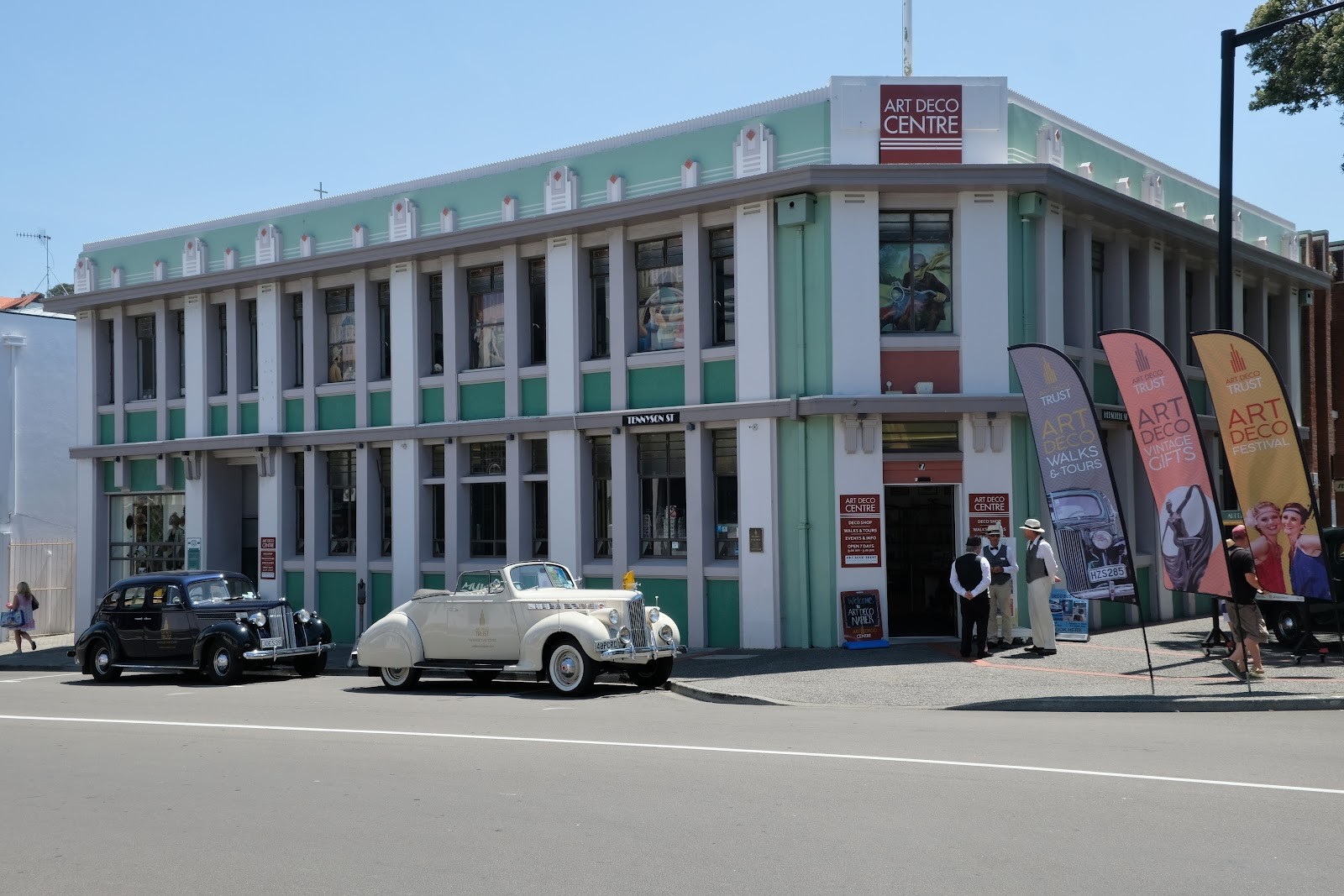
When you arrive in central Napier, it quickly becomes obvious why this seaside corner of Hawke's Bay holds such a distinctive reputation. Following the devastating 7.8 magnitude Hawke's Bay earthquake on 3 February 1931, much of the commercial centre was levelled by tremors and subsequent fires. What arose from that tragedy was one of the most cohesive urban rebuilds in modern history. Rather than replicating the Victorian and Edwardian structures that had stood before, local architects and planners embraced the defining global design movement of the early 1930s: Art Deco.
Today, more than 140 rebuild-era buildings survive across the city, turning the streets into an accessible open-air design gallery. Setting out on a napier art deco self guided walk allows you to appreciate these geometric façades, sunbursts, and local motifs at your own pace without keeping to a rigid group schedule. Here is everything you need to plan an independent walk through central Napier, from route planning to landmark spotting.
Orientation and Route Overview
Central Napier is remarkably compact and very walk-friendly, making navigation straightforward even for first-time visitors. A standard self-guided architectural route through the central business district spans roughly 1.1 kilometres (about 0.7 miles) and usually takes around 2 hours, leaving generous time to pause, examine detailing, and snap photos.
Because the streets form a tidy grid running parallel to the Pacific Ocean, you are never more than a few blocks from the waterfront. A logical place to begin any exploration is along Marine Parade before weaving inland through the principal commercial corridors, including Hastings Street, Emerson Street, and Tennyson Street. Along the way, the flat terrain ensures that walking is comfortable and unhurried.
Where to Find Maps and Digital Guides
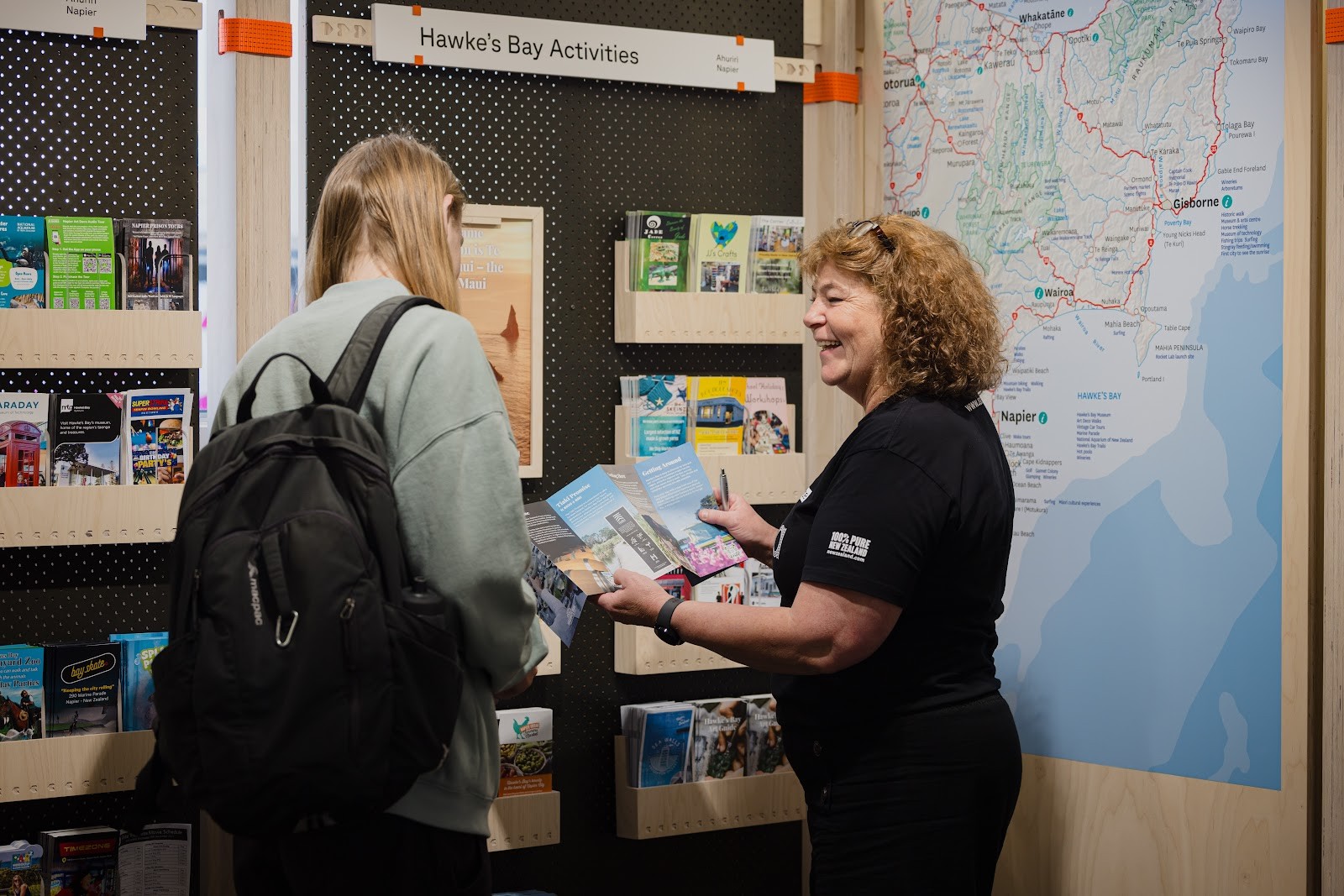
To follow the trail independently, having a good visual map makes a significant difference in spotting secondary decorative reliefs that might otherwise go unnoticed. If you prefer a physical orientation point, head directly to the seafront. The Napier isite Visitor Information Centre is located at 100 Marine Parade, right next to the Soundshell. It operates daily from 9:00 am to 5:00 pm and serves as a natural starting point for local travel advice and district maps.
For independent navigation, many travellers opt for mobile tour technology. Digital walking tour options can be downloaded to your phone using GPS walking tour apps that function offline, allowing you to follow turn-by-turn routes without requiring continuous mobile data. You may also encounter the work and physical presence of the Art Deco Trust, which preserves the city's 1930s heritage in the surrounding streets. Whether you are using a downloaded route guide or browsing street by street, navigating the precinct requires little more than comfortable footwear and a curious eye.
Marine Parade: Seafront Monuments and Open Spaces
Beginning on Marine Parade allows you to appreciate how the post-quake rebuilding effort connected civic recreation directly to the oceanfront. This broad boulevard features several prominent public works created during the recovery:
- Napier Soundshell: Constructed in the 1930s, this sweeping open-air amphitheatre reflects the period’s fondness for elegant curves, balance, and symmetry. It remains an active venue for community gatherings and open-air performances.
- New Napier Arch: Standing along the promenade, this ornamental arch was erected as an enduring symbol of the city's reconstruction following the disaster, welcoming pedestrians into the town centre.
- Veronica Sunbay Plaque: This commemorative site features an excerpt from Gertrude Ryder Bennett's poem Stronger City, providing a quiet moment of reflection on resilience and civic renewal.
- The Kirk Sundial: An understated yet decorative sundial illustrating how utilitarian street furniture in the 1930s was crafted with artistic intention.
Directly across the road from the beachfront reserve stands one of Napier’s most famous commercial structures: the Masonic Hotel. Reconstructed in 1932 on Marine Parade, the hotel seamlessly blends classic Deco geometry with Mediterranean and Spanish Mission influences, evidenced in its clean white façade, clean lines, and curved upper balconies.
Inland Architectural Highlights
Heading a block inland brings you into the commercial heart, where corporate headquarters, civic halls, and former government premises stand side by side. During the rapid 1930s rebuild, architects relied heavily on reinforced concrete to improve earthquake resistance. They enlivened these solid surfaces with zigzags, stepped vertical pilasters, sunburst pediments, and stylized indigenous Māori motifs, establishing an aesthetic identity unique to Hawke's Bay.
Key architectural stops to look for on your walk include:
- Daily Telegraph Building: Once the home of the provincial newspaper, this building stands as a benchmark of commercial confidence. Its façade features intricate geometric reliefs that illustrate the optimism and stylistic ambition of the era.
- Haynes Building: Widely regarded as one of Napier’s most photographed landmarks, this structure is prized for its strong vertical lines and distinctive decorative frontage.
- Former Central Post Office: Situated at the corner of Dickens and Hastings Streets, this commanding property highlights the importance of public civic infrastructure during the town's swift revival.
The surrounding blocks also boast fine examples of complementary architectural currents from the rebuild period, such as Stripped Classical banks and Spanish Mission chambers, offering subtle contrast against the dominant zigzags of pure Art Deco.
Contextualising the Story
A self-guided walk is considerably richer when paired with an understanding of the human events behind the façades. Right in the CBD, the regional museum and gallery complex—MTG Hawke's Bay Tai Ahuriri—offers free admission to visitors. Stepping inside provides immediate historical context on the February 1931 earthquake through permanent displays of artefacts retrieved from the rubble, archival photographs of rescue operations, and the original ship’s bell from the HMS Veronica, whose crew assisted with urgent medical and rescue relief in the harbour after the disaster.
Practical Tips for Your Self-Guided Tour
To get the most out of your independent walk, keep these practical points in mind:
- Look Above Street Level: While ground-floor shopfronts have seen modern glass and commercial signage added over decades of retail use, the upper storeys and rooflines remain remarkably intact. Keep your gaze directed upward toward parapets, cornices, and window transoms.
- Time Your Walk: Morning and late-afternoon light cast striking shadows across recessed plaster reliefs, chevron mouldings, and decorative spandrels, making these hours ideal for architectural photography.
- Take Your Time: While the core loop covers just over a kilometre, pausing for coffee or spending a moment reading heritage wall plaques allows you to absorb the urban atmosphere without rushing.
Napier’s collection of 1930s streetscapes represents an uncommon architectural achievement born from crisis. Taking an independent, self-guided stroll through its compact avenues gives you total freedom to investigate every stepped skyline, curved balcony, and ornamental detail at your own leisure.
Cover photo: Art Deco Trust - Ge Nielissen
By Alyssa.
Sources and further information
- Napier isite Visitor Centre | New Zealand
- Napier Art Deco Architecture Walk (Self Guided), Napier, New Zealand
- Napier Things To Do | Activities | Hawke's Bay New Zealand | Hawke's Bay Tourism
- Napier’s bold second act – The Fun of Travel
Sources checked: 2026-10-19.